

Protect Your Commercial Property for the Long Term
Commercial properties face a variety of challenges as buildings age and environmental conditions change. Throughout New Jersey and the Mid-Atlantic, business owners must contend with flooding concerns, foundation deterioration, rising groundwater levels, storm impacts, and evolving development requirements. Commercial structural elevation offers a proactive way to address these challenges while helping protect the future of a property. By raising a building and modifying its foundation system, owners can improve structural performance, reduce environmental risks, and strengthen the long-term value of their investment.
At Hale Built Group, we provide commercial building elevation services for office buildings, retail centers, warehouses, healthcare facilities, hospitality properties, municipal structures, industrial buildings, and mixed-use developments throughout New Jersey and the Mid-Atlantic. Whether you’re planning a redevelopment project, addressing foundation concerns, or exploring flood mitigation options, our team can help determine the right solution for your property.
What Is Commercial Structural Elevation?
Commercial structural elevation involves carefully lifting a building above its existing elevation and modifying or reconstructing the foundation system beneath it. Unlike traditional repairs that focus on a specific area of concern, structural elevation addresses the building as a whole. The process allows property owners to improve how a structure interacts with surrounding site conditions while creating opportunities for foundation improvements, flood protection measures, and long-term property preservation. Because commercial buildings are often larger and more complex than residential structures, these projects require specialized equipment, experienced contractors, detailed engineering, and careful project planning.
Benefits of Commercial Structural Elevation
For many property owners, structural elevation is a long-term investment in their property’s future rather than a response to a single issue.
Commercial building elevation may help:
- Reduce future flood-related damage
- Improve business continuity
- Protect equipment and inventory
- Support redevelopment initiatives
- Address aging foundation systems
- Improve property resilience
- Meet updated floodplain requirements
- Extend the useful life of an existing building
- Preserve long-term property value
For businesses located in challenging environments, elevation can become an important part of a broader property protection strategy.

Common Commercial Elevation Projects
Commercial structural elevation can be performed on a wide range of building types and project scopes.
Hale Built Group works with:
- Office buildings
- Retail centers
- Shopping plazas
- Warehouses
- Industrial facilities
- Healthcare buildings
- Hospitality properties
- Schools and universities
- Municipal buildings
- Mixed-use developments
While every building presents unique challenges, elevation projects are often part of larger property improvement, foundation replacement, redevelopment, or risk-mitigation initiatives.
Signs Your Building May Benefit From Structural Elevation
Many owners assume elevation is only considered after a major flood event. In reality, recurring structural or environmental problems often lead property owners to explore elevation long before significant damage occurs.
Some common warning signs include:
- Repeated flooding
- Water intrusion
- Foundation settlement
- Uneven floors
- Structural cracking
- Persistent drainage issues
- Moisture-related deterioration
- Increased flood vulnerability
A professional evaluation can help determine whether structural elevation, foundation repair, or another solution best fits the property’s needs.
Contact Hale Built Group today to schedule a consultation and learn whether commercial structural elevation is right for your property.
Commercial Structural Elevation vs. Foundation Repair
One of the most common questions commercial property owners ask is whether elevation or foundation repair is the better option. Foundation repair is typically used to correct localized structural problems such as settlement, cracking, movement, or loss of support. Solutions may include helical piles, underpinning systems, stabilization methods, and structural reinforcement.
Structural elevation is generally considered when broader concerns exist. These projects often involve raising the entire structure to address environmental risks, foundation replacement needs, redevelopment goals, or long-term property planning objectives. The best solution depends on the building’s condition, site characteristics, and overall project goals.
Commercial Structural Elevation vs. Demolition and Reconstruction
When a commercial property faces significant structural challenges, owners are often forced to evaluate several potential paths forward. In some situations, complete reconstruction may be necessary. However, structural elevation can often provide an alternative that allows property owners to preserve an existing building while improving its foundation system and overall performance.
By retaining the structure and addressing underlying concerns, owners may be able to extend the life of the building while avoiding the disruption associated with a complete rebuild. A thorough structural assessment is the best way to determine which option makes the most sense for the property.
Engineering and Site Evaluation
Every successful elevation project begins with understanding the building, the site, and the conditions surrounding both.
Before construction begins, engineers typically evaluate:
- Existing foundation conditions
- Structural load requirements
- Soil characteristics
- Groundwater conditions
- Utility connections
- Drainage concerns
- Building code requirements
In many cases, geotechnical investigations are also performed to better understand subsurface conditions and support foundation design recommendations. This planning stage helps ensure the elevation strategy is both safe and effective for the long term.
Commercial Structural Elevation Along the Jersey Shore
Coastal New Jersey presents unique challenges for commercial property owners. Businesses located throughout Monmouth County, Ocean County, Atlantic County, and Cape May County often face elevated groundwater levels, storm impacts, shoreline-related conditions, and increased flood exposure compared to many inland properties. As a result, commercial structural elevation has become an increasingly common solution for businesses seeking to improve long-term property resilience and protect valuable assets near bays, waterways, and coastal communities.
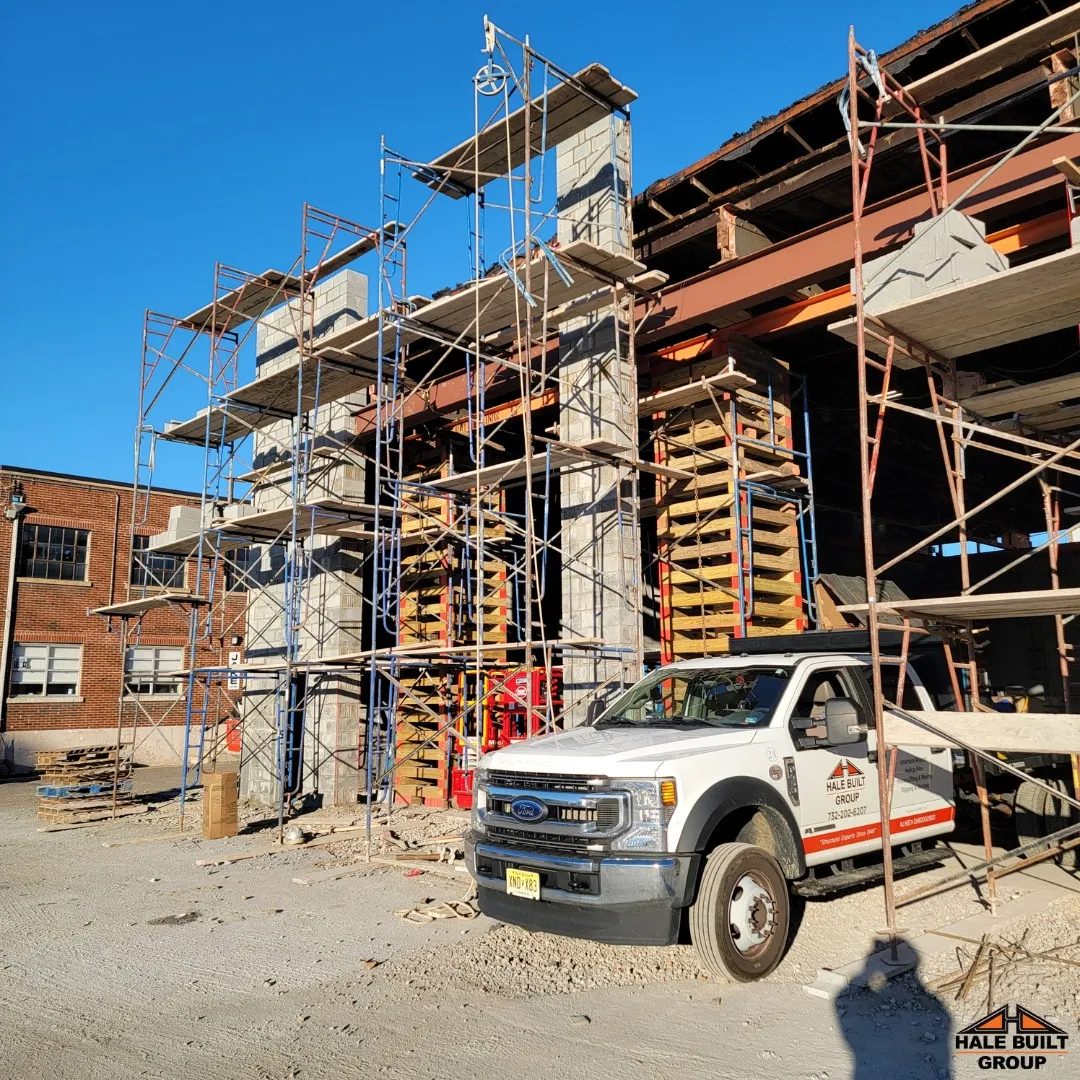
FEMA Compliance and Flood Mitigation Considerations
Many commercial elevation projects are driven by flood-related concerns. Raising critical portions of a structure above anticipated flood levels can help reduce future damage and minimize interruptions to day-to-day operations. Elevation projects may also support compliance with applicable floodplain management requirements and future redevelopment objectives. For many property owners, structural elevation represents a proactive investment in protecting their building rather than waiting for future damage to occur.
What Influences Commercial Building Elevation Costs?
No two elevation projects are exactly alike, which means costs can vary significantly.
Several factors influence project scope, including:
- Building size
- Foundation type
- Site accessibility
- Soil conditions
- Utility modifications
- Engineering requirements
- Regulatory approvals
- Foundation reconstruction needs
A professional site evaluation is the most effective way to understand the requirements and potential costs associated with a particular building.
Our Commercial Structural Elevation Process
Every project begins with a detailed assessment of the building, foundation system, and overall site conditions. After the evaluation phase, our team works alongside engineers and project stakeholders to develop an elevation strategy tailored to the property’s objectives. Specialized lifting systems are then used to safely raise the structure while maintaining stability throughout construction.
Once the building reaches its intended elevation, foundation modifications, stabilization measures, utility adjustments, and final inspections are completed before the property is returned to service. Our goal throughout every phase is simple: prioritize safety, protect the structure, and minimize disruption to business operations.
Why Choose Hale Built Group?
Commercial structural elevation requires a level of planning, coordination, and execution that few contractors can provide. Hale Built Group brings extensive experience in commercial building elevation, structural lifting, foundation stabilization, deep foundation solutions, and flood mitigation projects throughout New Jersey and the Mid-Atlantic.
We work closely with property owners, engineers, architects, and development teams to create solutions tailored to each building’s specific challenges and goals. When your property requires a long-term solution, our team has the experience and expertise to help guide the project from evaluation through completion.
Schedule a Commercial Structural Elevation Consultation
If you’re evaluating options to protect, improve, or reposition a commercial property, structural elevation may be worth considering. Hale Built Group helps business owners, developers, property managers, municipalities, and facility operators throughout New Jersey assess their options and develop practical solutions for the future.
Contact Hale Built Group today to schedule a consultation and learn whether commercial structural elevation is right for your property.
Frequently Asked Questions
How much does commercial structural elevation cost?
Costs vary based on building size, foundation type, site accessibility, engineering requirements, and project complexity. An on-site evaluation is the best way to determine project-specific costs.
Can a commercial building remain operational during elevation?
In some cases, portions of a facility may remain operational during construction. The answer depends on occupancy requirements, safety considerations, and the overall project scope.
What types of commercial buildings can be elevated?
Many commercial structures can be elevated, including office buildings, warehouses, retail centers, healthcare facilities, hospitality properties, schools, municipal buildings, and industrial facilities.
Is commercial structural elevation only used for flood protection?
No. While flood mitigation is a common reason, commercial elevation may also be used to address foundation concerns, support redevelopment plans, improve site functionality, and extend the life of an existing structure.
What is the difference between commercial building elevation and foundation repair?
Foundation repair addresses localized structural issues, while commercial structural elevation involves lifting the entire structure and modifying the supporting foundation system.
Do commercial structural elevation projects require engineering plans?
Yes. Most projects require engineering evaluations, structural calculations, and foundation design analysis to ensure the building can be elevated safely.
How long does a commercial structural elevation project take?
Project timelines vary based on building size, site conditions, permitting requirements, utility coordination, and overall project complexity.
Can commercial buildings in FEMA flood zones be elevated?
Yes. Many commercial properties located in flood-prone areas are elevated as part of broader flood mitigation and risk-reduction strategies.
Is a geotechnical investigation necessary before structural elevation?
Many projects benefit from geotechnical evaluations because soil conditions, groundwater levels, and bearing capacity can directly influence foundation design decisions.
What factors determine whether a building can be elevated?
Structural condition, foundation type, site constraints, accessibility, engineering feasibility, and project goals all play a role in determining whether elevation is a viable solution.


